
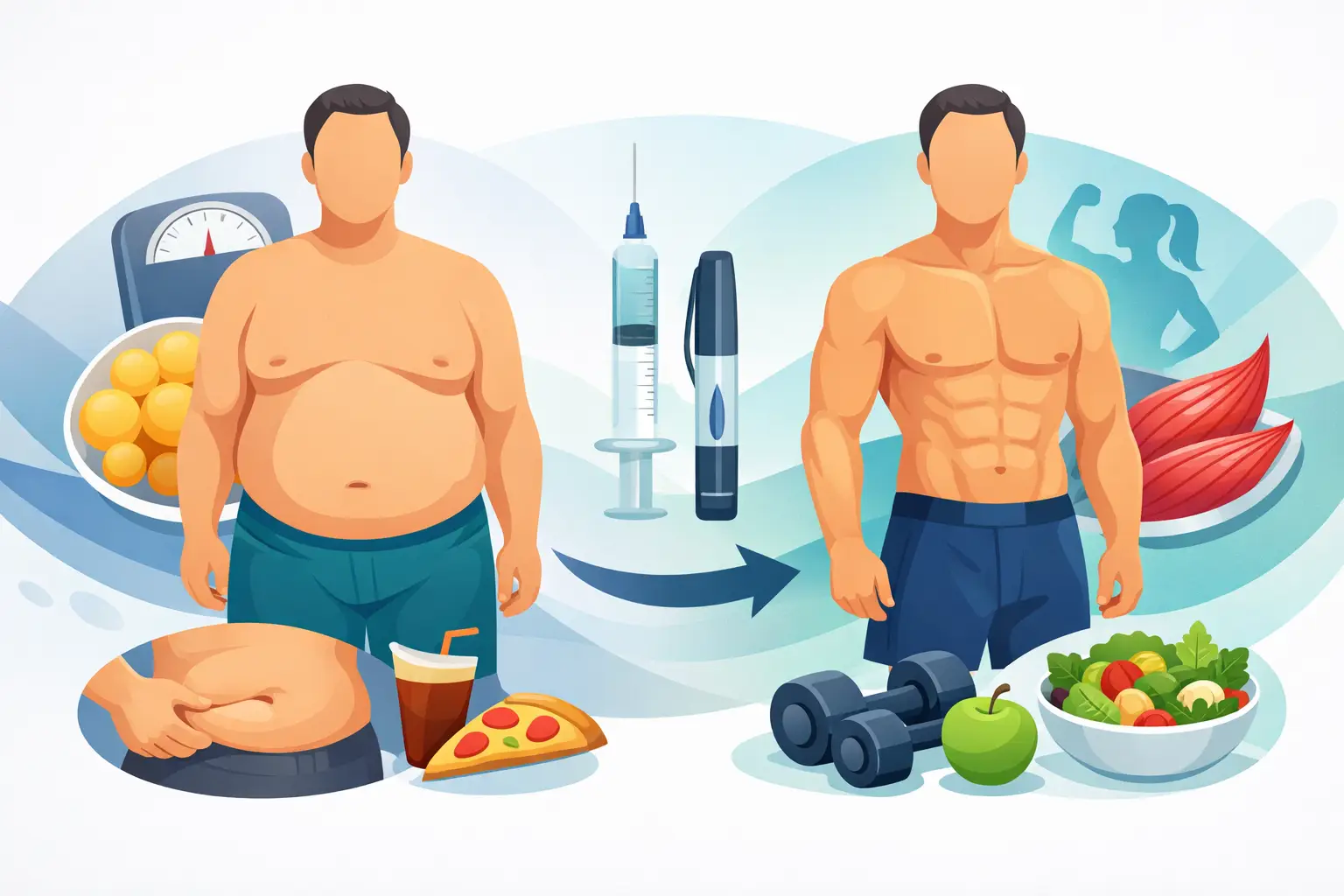

A lower number on the scale does not automatically mean a better physique. Tirzepatide body recomposition results are most meaningful when fat mass falls while lean mass, training performance, and day-to-day function are protected. That distinction matters for anyone pursuing a sharper, healthier-looking body composition rather than weight loss at any cost.
Tirzepatide can create a powerful calorie-deficit environment by reducing appetite and improving metabolic control. But the medication does not independently tell the body to keep every pound of muscle. The quality of the outcome depends on what happens around it: protein intake, resistance training, rate of loss, sleep, hydration, and appropriate clinical monitoring.
What Tirzepatide Body Recomposition Results Actually Mean
Body recomposition describes a shift in the relationship between fat mass and lean mass. In a favorable outcome, someone loses a meaningful amount of body fat, maintains most of their muscle tissue, and sees improvements in waist measurement, clothing fit, strength retention, or body-fat percentage.
This is different from simply becoming lighter. During any aggressive calorie deficit, the body can lose fat, water, glycogen, and lean tissue. A scale cannot separate those changes. That is why a 20-pound loss can look dramatically different from one person to another, even at the same starting weight.
Tirzepatide acts on GIP and GLP-1 pathways. For eligible patients using an FDA-approved version under medical supervision, this dual action can reduce hunger, increase fullness, and support significant weight loss over time. Those effects may make it easier to consistently maintain the nutritional structure that body recomposition requires.
The key word is easier, not automatic. If appetite suppression leads to chronically low protein intake, skipped meals, poor recovery, and no resistance training, lean-mass preservation becomes less likely.
Why Fat Loss Does Not Equal Muscle Gain
Many people use “recomp” to mean gaining muscle while losing fat at the same time. That can happen, particularly for beginners, people returning to training, individuals with higher starting body fat, or those improving a previously low-protein diet. It is not the most realistic expectation for every tirzepatide user.
For experienced lifters in a substantial calorie deficit, the more practical goal is often muscle preservation while body fat declines. That is still an excellent recomposition result. As fat comes off, existing muscle becomes more visible, waist-to-shoulder proportions can improve, and movement may feel easier even if new muscle growth is modest.
The trade-off is clear: faster weight loss can be motivating, but a very steep deficit may increase the risk of fatigue, reduced training output, and lean-tissue loss. The best pace depends on starting body composition, medical history, medication response, activity level, and nutritional capacity.
The first changes are not always fat
Early tirzepatide progress may include reduced food volume, lower sodium intake, depleted glycogen stores, and shifts in water weight. These changes can move the scale quickly, especially in the first weeks. They are not useless results, but they should not be mistaken for pure fat loss.
A longer view is more accurate. Track trends over several weeks using waist measurements, consistent progress photos, gym performance, and body-composition testing when available. DEXA scans can be useful, although no measurement method is perfect and normal hydration changes can influence readings.
The Muscle-Preservation Priorities That Matter Most
The most effective body recomposition plan is not complicated, but it does require consistency. Appetite may be lower on tirzepatide, so nutrition has to become more intentional rather than more casual.
Make protein a non-negotiable anchor
Protein supports muscle protein synthesis, recovery, fullness, and lean-mass retention during a deficit. A clinician or qualified dietitian can individualize a target based on body size, kidney function, training status, and total calorie intake. For many active adults, distributing protein across meals is more realistic and productive than trying to consume nearly all of it at dinner.
When appetite is limited, start with protein-first meals: eggs, Greek yogurt, fish, poultry, lean meat, tofu, cottage cheese, or a well-tolerated protein shake. The best option is the one that can be repeated consistently without worsening nausea or fullness.
Continue resistance training
Muscle is metabolically expensive tissue. Resistance training gives the body a reason to retain it. A well-designed program does not need to be extreme. It needs progressive tension, sound technique, and recovery capacity.
For most people, two to four weekly sessions built around major movement patterns can provide a solid foundation. Keep an eye on performance markers such as reps, load, stability, and total training volume. A temporary plateau while losing fat is not necessarily a problem. A sustained collapse in strength, motivation, and recovery is a signal to reassess calories, protein, sleep, and the overall pace of loss.
Do not let low appetite become low nutrition
Tirzepatide-related nausea, early fullness, constipation, and reduced interest in food can make it hard to eat enough nutrient-dense food. Smaller meals, adequate fluids, fiber adjusted to tolerance, and simple food choices can help. Persistent vomiting, dehydration, severe abdominal pain, or symptoms that feel unusual require prompt medical attention.
Carbohydrates also have a role, especially for people training hard. Extremely low carbohydrate intake may reduce glycogen and training quality for some individuals. The right intake depends on total calories, activity demands, preferences, and metabolic goals.
What a Strong Result Looks Like in Practice
A strong result is not defined by a single before-and-after image. It usually looks like a steadily declining waistline, lower fat mass over time, stable or mostly stable strength, manageable energy, and eating habits that can continue after the initial fat-loss phase.
For someone beginning with obesity and limited training experience, visible recomposition may be substantial. Fat loss can improve mobility and make resistance training more accessible, creating a favorable cycle. For a leaner, advanced trainee, the same medication may help appetite management but produce less dramatic visual change, particularly if there is little body fat left to lose.
Age matters, too. Older adults may be more vulnerable to lean-mass loss and often benefit from especially deliberate protein intake, strength training, and clinician oversight. People with a history of disordered eating should approach appetite-suppressing medications with added care and specialized support.
Common Mistakes That Blunt Results
The most common mistake is treating tirzepatide as a replacement for a body-composition strategy. Medication can change appetite. It cannot perform resistance training, plan meals, or identify whether weight loss is coming primarily from fat versus lean tissue.
Another mistake is chasing the fastest possible scale change. If the plan is so restrictive that training quality vanishes and protein becomes difficult to consume, the outcome may be lighter but not necessarily stronger or more athletic.
It is also a mistake to rely on unverified compounds or unclear sourcing. Product identity, storage, sterility, and quality controls matter greatly with injectable products. For prescription treatment, use medication obtained through a licensed prescriber and pharmacy, and discuss all supplements or compounds with the clinician managing your care. Research-use products are not interchangeable with FDA-approved medications and are not intended for human use.
How Long Does Recomposition Take?
Visible changes often require patience. Early scale movement may be quick, while changes in waist size, muscular definition, and fitness tend to become clearer across months of consistent habits. Plateaus are normal as body weight, energy needs, and training capacity change.
Instead of judging progress only by weekly pounds lost, assess a monthly trend. Compare waist and hip measurements, repeat photos under the same conditions, review training logs, and note practical changes such as improved walking tolerance or better movement confidence. These markers give a more complete view of progress than the scale alone.
A More Useful Goal Than “Get as Light as Possible”
The best tirzepatide body recomposition results come from using fat loss as an opportunity to build durable systems: protein-centered meals, progressive training, recovery habits, and objective tracking. The goal is not to make food disappear from your life or to force the fastest transformation. It is to arrive at a lower-fat, more capable body that you can maintain with your clinician-guided plan and your own repeatable habits.